

On May 28, 2026, Anthropic released Claude Opus 4.8, the newest flagship in its Claude 4 family. For enterprises evaluating large language models for production workloads — coding assistants, autonomous agents, document analysis, customer-facing copilots — this release matters more than most. The pricing held flat, the benchmarks moved meaningfully against both GPT-5.5 and Gemini 3.1 Pro, and a new orchestration capability called dynamic workflows changes what a single AI session can accomplish. At Champlin Enterprises, we’ve already begun integrating Opus 4.8 into client engagements, and this post breaks down what’s actually new, what it means for your AI strategy, and how it stacks against the competition.
- What Claude Opus 4.8 Is and Why It Matters
- Benchmark Comparison: Opus 4.8 vs. GPT-5.5 vs. Gemini 3.1 Pro
- Dynamic Workflows and the Rise of Parallel Subagents
- Fast Mode, Effort Control, and the New Pricing Math
- The Honesty and Judgment Improvements That Change Production Risk
- Enterprise Adoption: Where Opus 4.8 Fits in a Multi-Model Stack
What Claude Opus 4.8 Is and Why It Matters
Claude Opus 4.8 is Anthropic’s newest frontier model, succeeding Opus 4.7 with the model identifier claude-opus-4-8. It is available immediately through claude.ai, the Claude API, Amazon Bedrock, Google Cloud Vertex AI, and Microsoft Azure, with pricing held at the same $5 per million input tokens and $25 per million output tokens as its predecessor — a deliberate signal that Anthropic is competing on capability rather than discounting to chase market share against OpenAI and Google.
What separates this release from a typical incremental update is the scope of the gains. Opus 4.8 leads on agentic coding (SWE-Bench Pro), agentic computer use (OSWorld-Verified), and multidisciplinary reasoning with tools (Humanity’s Last Exam), beating not just Opus 4.7 but also OpenAI’s GPT-5.5 and Google’s Gemini 3.1 Pro across most categories. For the first time in months, there is a clear, defensible answer to the question “which model is best at agentic work” — and the answer is Opus 4.8.
The model also arrives alongside a public preview of “dynamic workflows” inside Claude Code, a control panel for adjusting how much effort Claude applies to specific tasks, and a Messages API change that allows system instructions to be updated mid-conversation without breaking prompt cache. Each of these is significant on its own; together they reshape what a production AI integration can look like.
Benchmark Comparison: Opus 4.8 vs. GPT-5.5 vs. Gemini 3.1 Pro
The benchmark story is unusually clean. On SWE-Bench Pro — the agentic coding benchmark built from real GitHub pull requests in mature open-source repositories — Opus 4.8 scores 69.2%, up from 64.3% on Opus 4.7. GPT-5.5 scores 58.6% on the same benchmark; Gemini 3.1 Pro scores 54.2%. The gap matters because SWE-Bench Pro measures end-to-end task completion, not isolated code generation: it captures whether the model can read a repository, locate the relevant files, propose a patch, and verify the change.
On OSWorld-Verified, which evaluates whether a model can drive a real operating system through screenshots and mouse/keyboard actions, Opus 4.8 hits 83.4%, edging Opus 4.7 (82.8%) and pulling well ahead of GPT-5.5 (78.7%) and Gemini 3.1 Pro (76.2%). On Humanity’s Last Exam, a multidisciplinary reasoning benchmark designed to be at the limit of human expert knowledge, Opus 4.8 scores 49.8% without tools and 57.9% with tools — ahead of every competing frontier model on both axes.
Knowledge-work performance improved from a composite score of 1753 to 1890. For enterprise buyers, the practical read is that Opus 4.8 has decisively claimed the top of the leaderboard for agentic tasks while remaining competitive with GPT-5.5 on raw creative output and with Gemini 3.1 Pro on cost-per-token for high-volume inference. We expect this to push more teams toward a multi-model architecture rather than single-vendor lock-in, a pattern we already recommend in most Champlin Enterprises engagements.
Dynamic Workflows and the Rise of Parallel Subagents
The headline feature for engineering teams is dynamic workflows, currently available in research preview inside Claude Code on Enterprise, Team, and Max plans. A single Opus 4.8 session can now generate a plan for a large task — a codebase migration across hundreds of files, a multi-service refactor, a cross-repository security patch — and then orchestrate hundreds of parallel subagents to execute that plan, verify the results, and roll back failures before reporting back to the user.
This is structurally different from a chain-of-thought or single-thread agent loop. It is closer to a build system where the model is the scheduler, and it directly attacks the wall that most production AI agents hit: tasks that would take a single agent hours can now be parallelized into minutes, and tasks that previously required hand-rolled orchestration in a framework like LangGraph or in-house tooling can now be expressed as a natural-language instruction. Early users report success on migrations involving 200+ files and multi-day refactors completed inside a single working session.
For enterprises, the implication is that the build-vs-buy line on AI orchestration is moving. Teams that invested heavily in custom agent frameworks should be evaluating whether Anthropic’s native primitives can replace 60–80% of that code. Teams that have not yet built orchestration should consider waiting and adopting the native pattern. The cost of building scaffolding that gets obsoleted by a model release is one of the highest hidden costs in applied AI today.
Fast Mode, Effort Control, and the New Pricing Math
Anthropic introduced Fast Mode for Opus 4.8 — the same model, running at approximately 2.5x normal throughput, priced at $10 per million input tokens and $50 per million output tokens. That is roughly one-third of what fast inference for Opus has cost previously. Inside Claude Code, Fast Mode activates with the /fast command; in the API, it is selectable per-request.
Alongside Fast Mode, a new effort-control dropdown on claude.ai and Claude Cowork lets users dial how much computational effort the model applies to a given prompt. For consumer use this surfaces as a quality-versus-speed slider; for enterprise integrations it surfaces as an API parameter that lets teams trade latency for accuracy on a per-call basis. Combined, these two controls give engineering organizations far more granular cost-quality optimization than the previous all-or-nothing model selection paradigm.
The pricing math now favors Opus 4.8 over Opus 4.7 in nearly every production scenario we model. Same per-token cost, materially better performance on agentic tasks, optional 2.5x speedup at a one-third discount versus the old fast tier, and a Messages API change that allows mid-conversation system updates without invalidating prompt cache — that last item alone can cut long-running agent costs by 30–50% for teams using prompt caching properly.
The Honesty and Judgment Improvements That Change Production Risk
Anthropic claims Opus 4.8 is approximately four times less likely than Opus 4.7 to miss flaws in code it produces, and is materially less prone to unsupported claims and overconfident task completion. In a production context, this is not a minor capability improvement — it is a direct reduction in the failure mode that most often breaks trust in AI integrations.
The standard pattern with LLM-driven agents is that they confidently report success on tasks they partially or wholly failed to complete. Every downstream system has to assume the report may be wrong, which forces verification layers, human-in-the-loop checkpoints, and conservative deployment gates. A model that is genuinely better at saying “I tried this, it didn’t work, here’s why” or “this part is done, this part is not” removes scaffolding from every agent loop it touches.
For regulated industries — financial services, healthcare, federal — this is the single most important release-level change. We have written extensively about why governance and oversight cannot be skipped in regulated AI deployments, and a model whose self-reporting can be trusted reduces the burden on those oversight layers without eliminating the need for them. Opus 4.8 does not solve the AI risk problem in regulated sectors; it does shift the cost curve in the right direction.
Enterprise Adoption: Where Opus 4.8 Fits in a Multi-Model Stack
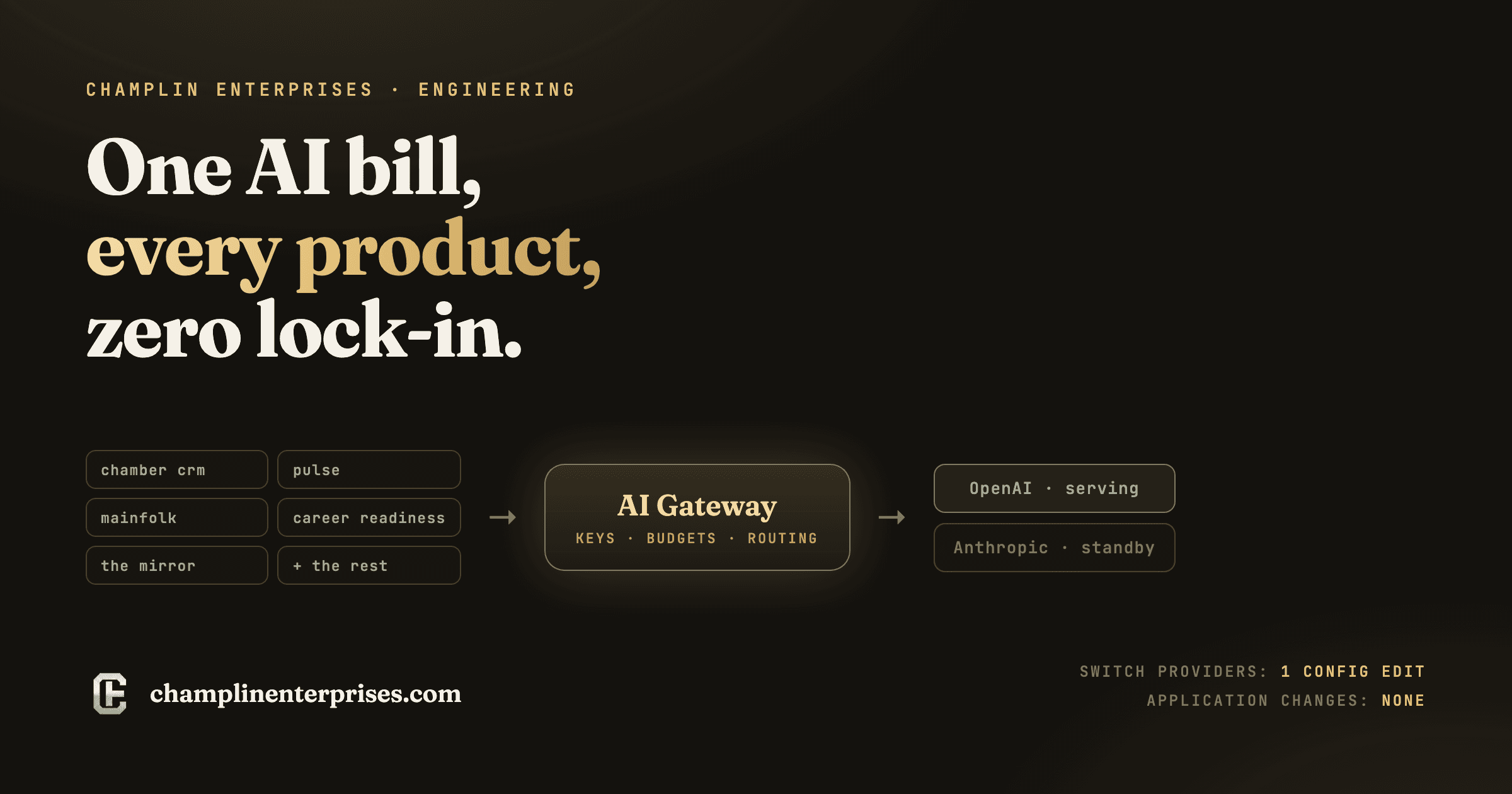
Our recommendation to enterprise clients is to adopt a multi-model architecture rather than standardize on a single vendor. With Opus 4.8 released, the routing logic we recommend looks roughly like this: route agentic, multi-step, judgment-intensive work to Opus 4.8; route high-volume batch generation and document QA to Gemini 3.1 Pro for cost; route creative writing, image-adjacent multimodal tasks, and brainstorming to GPT-5.5; and keep open-source models in reserve for on-premise or high-volume embeddings. The economics of single-vendor lock-in have not been favorable in any 2026 model generation, and Opus 4.8 reinforces rather than weakens that conclusion.
For teams already running Anthropic in production, the migration path to Opus 4.8 is trivial — change the model identifier, regression-test against your eval suite, evaluate Fast Mode for latency-sensitive paths, and pilot dynamic workflows on one large refactor before rolling out broadly. For teams not yet running Anthropic, this release is the right inflection point to start. The combination of best-in-class agentic capability, unchanged pricing, and meaningful honesty improvements makes Opus 4.8 the strongest case yet for adding Claude to a production AI stack.
At Champlin Enterprises, our AI Prototype-to-Production Sprint is built specifically for organizations evaluating frontier models like Opus 4.8 against real business workloads — two weeks, $25K, a working production-grade prototype on the model and orchestration stack that fits your environment. If you are sizing up Opus 4.8 against your roadmap and want a clear-eyed assessment rather than a vendor pitch, this is where we’d start.