
What we build
Principal engineering,
built to launch.
If you're looking specifically for Illinois web design and development, start with our web design and development page for business websites. If the work is broader — managed hosting, client portals, or support — start with our managed hosting and support platform. We are a software company, not a marketing agency, and every engagement is principal-level, AI-first, and framed around an outcome rather than a scope document. Nothing here starts from a bought template. The Sprint is a flat $25,000. Build and Fractional scale with the problem. If you want to see the software we build and run ourselves, start with our products. If you're planning a bigger build, read the Inner Circle roadmap; when you're ready to talk scope, start a project.

01
AI-First Applications
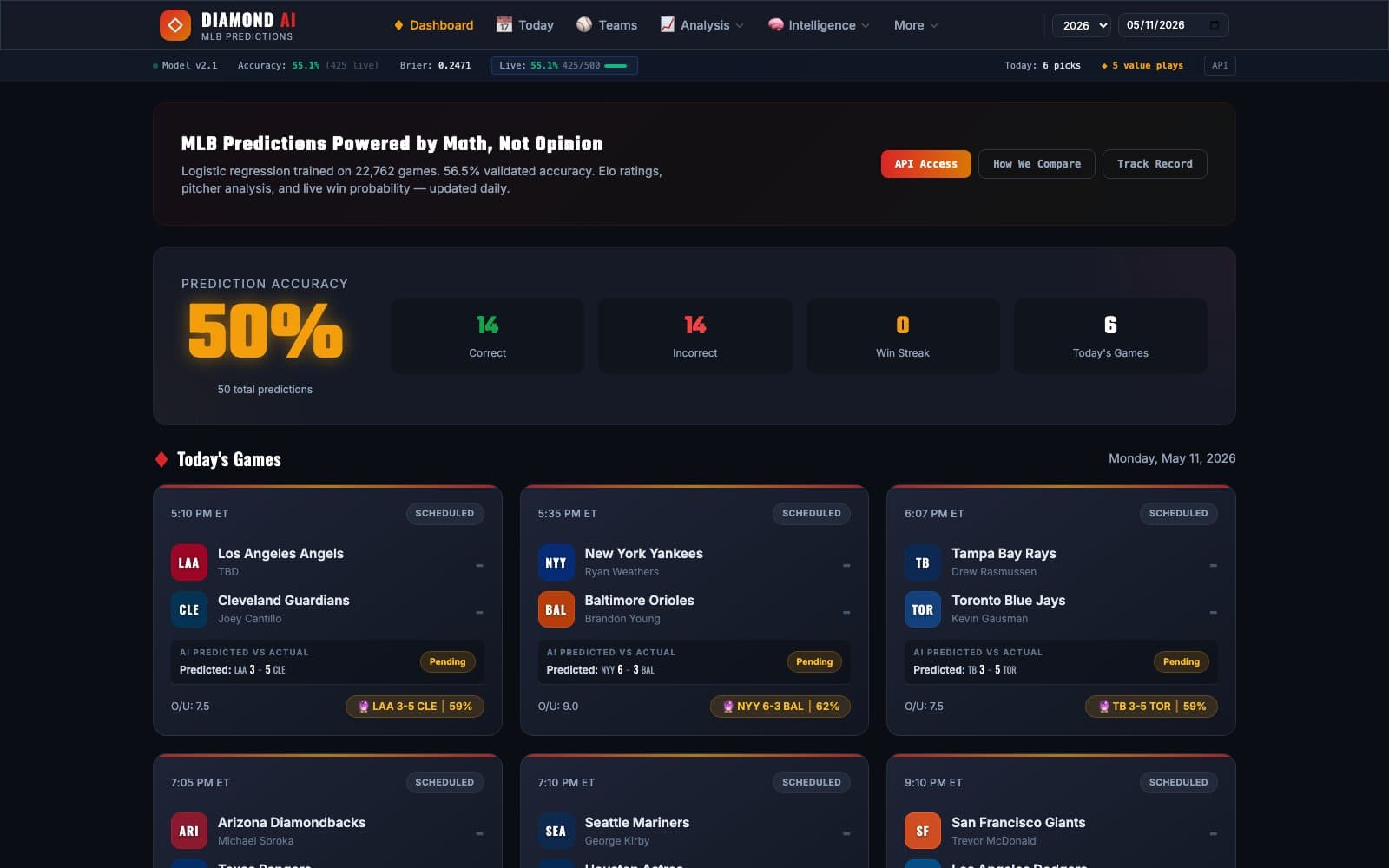
We don’t bolt AI onto existing products. We architect systems with intelligence at the core — custom model integration, LLM-powered workflows, and data pipelines designed to get smarter every week. The goal is leverage, not a talking point.
What this looks like in practice
- Launch a working AI feature in weeks, not quarters, with evaluation baked in
- Wire Claude, OpenAI, or a self-hosted model into the software you already run
- Replace manual workflows with machine-driven ones that stay auditable
- Build the evaluation rig so you know whether the model actually makes things better
- Design for the day the model gets smarter, not locked to a single provider
02
Custom Web Applications
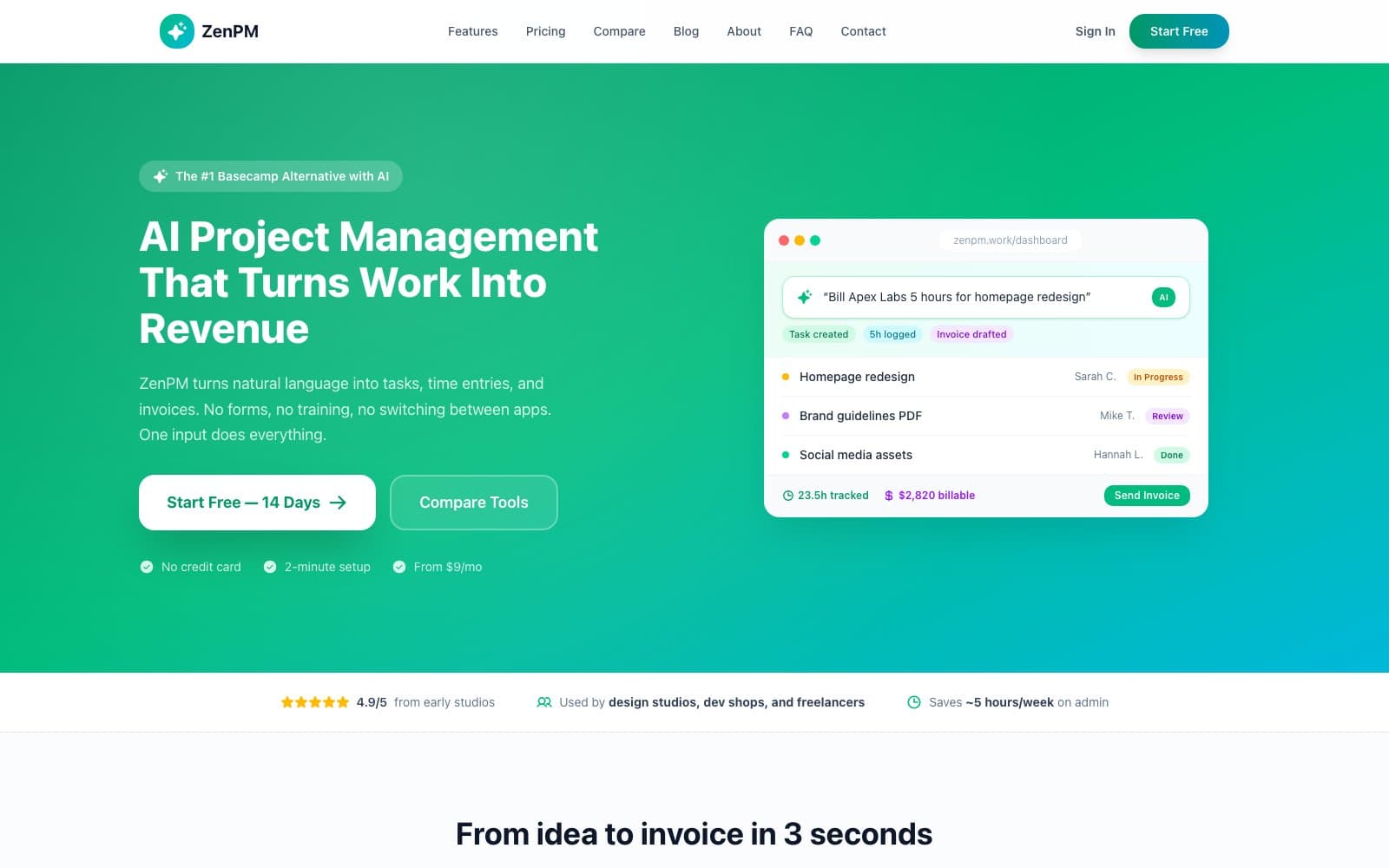
Full-stack engineering for the business logic off-the-shelf software can’t handle. Internal tools, customer portals, SaaS platforms, data-driven applications — built for the businesses who know their process better than any vendor ever will.
What this looks like in practice
- Replace a $40K/year SaaS stack with software you actually own
- Wire legacy systems together so your team stops living in spreadsheets
- Build the internal tool that cuts a recurring 6-hour task down to under an hour
- Architect the SaaS your team needs but no vendor sells
- Launch on Vercel, AWS, or your own infrastructure, your rules
03
iOS & Android Apps
Native and cross-platform mobile engineering built for performance. Kotlin Multiplatform and Compose Multiplatform share business logic across platforms while every UI stays native. One codebase. Two app stores. Zero compromise on feel.

What this looks like in practice
- Launch iOS and Android from one codebase without the usual cross-platform compromises
- Native feel on both stores, not a wrapped web view
- Push notifications and offline sync that actually work in the field
- App Store + Play Store deployment handled end to end
- Built to hand over, no proprietary frameworks, no lock-in
04
Software Engineering
Architecture reviews, technical due diligence, and principal-level judgment on hire. When your team needs an experienced engineer to evaluate a stack, plan a migration, or audit a codebase, you get twenty-eight years of perspective — not a junior consultant reading off a checklist.

What this looks like in practice
- Get a second opinion from a principal engineer before you commit — not after
- Unblock a stalled migration with one week of focused review
- Audit a codebase you inherited and get a prioritized punch list
- Pre-acquisition technical due diligence for businesses and private equity
- Judgment calls on AI adoption — what will pay off, what won’t
New service · AI agent operations
An AI workforce that delivers
like an engineering team.
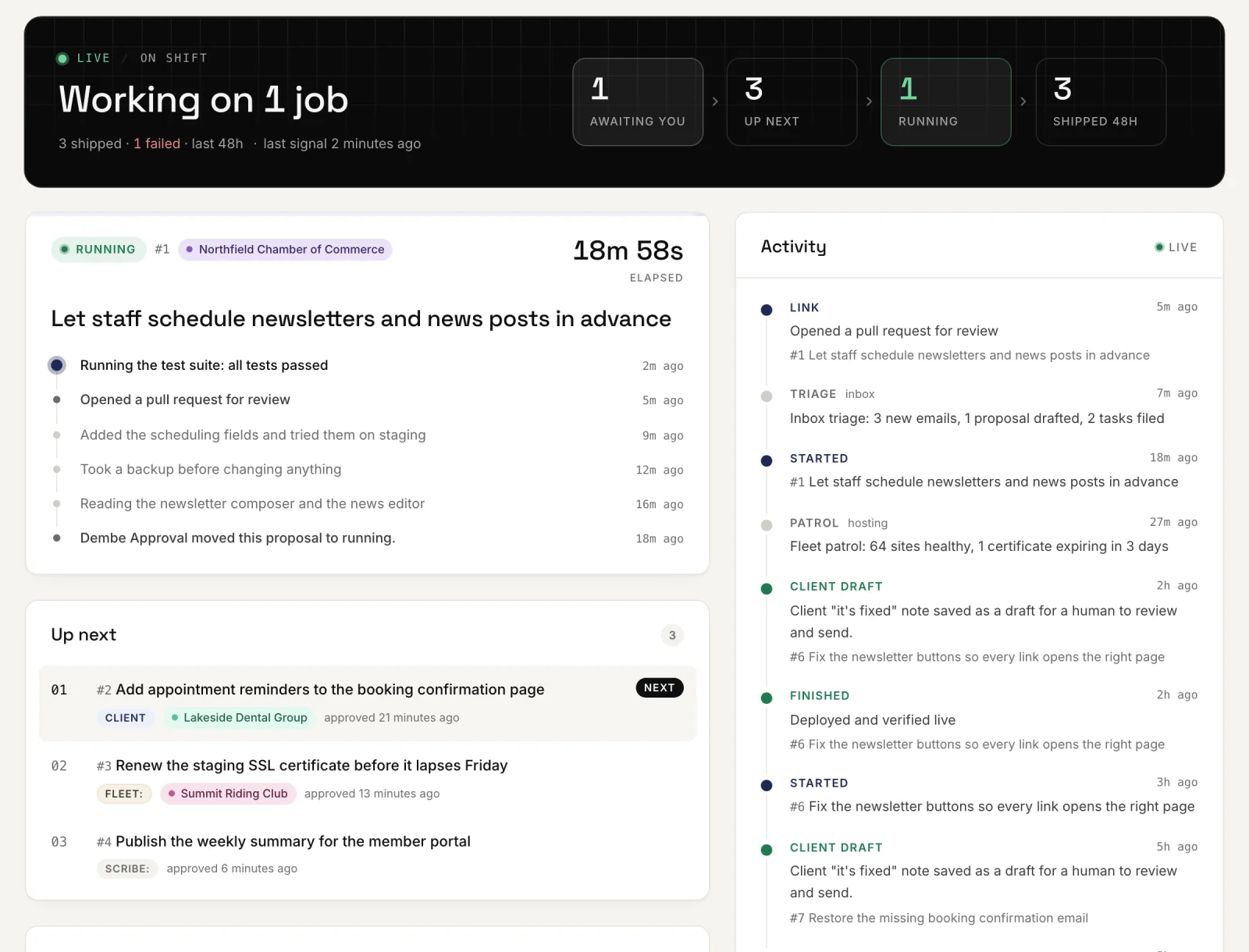
We run our own company on Dembe OS: agents read the inbox, turn requests into tasks, propose the work, and carry it out once a human approves. Every change lands as a GitHub pull request with tests and required checks, so nothing reaches production unreviewed.
We build the same thing for clients. Your tools, your approval rules, your audit trail, wired into the systems you already run.
- Human approval on every action that matters
- Pull requests and tests on every code change
- A full audit log of what ran, when, and why
Proof, not slideware
We don't pitch “AI-first.”
We build it and launch it.
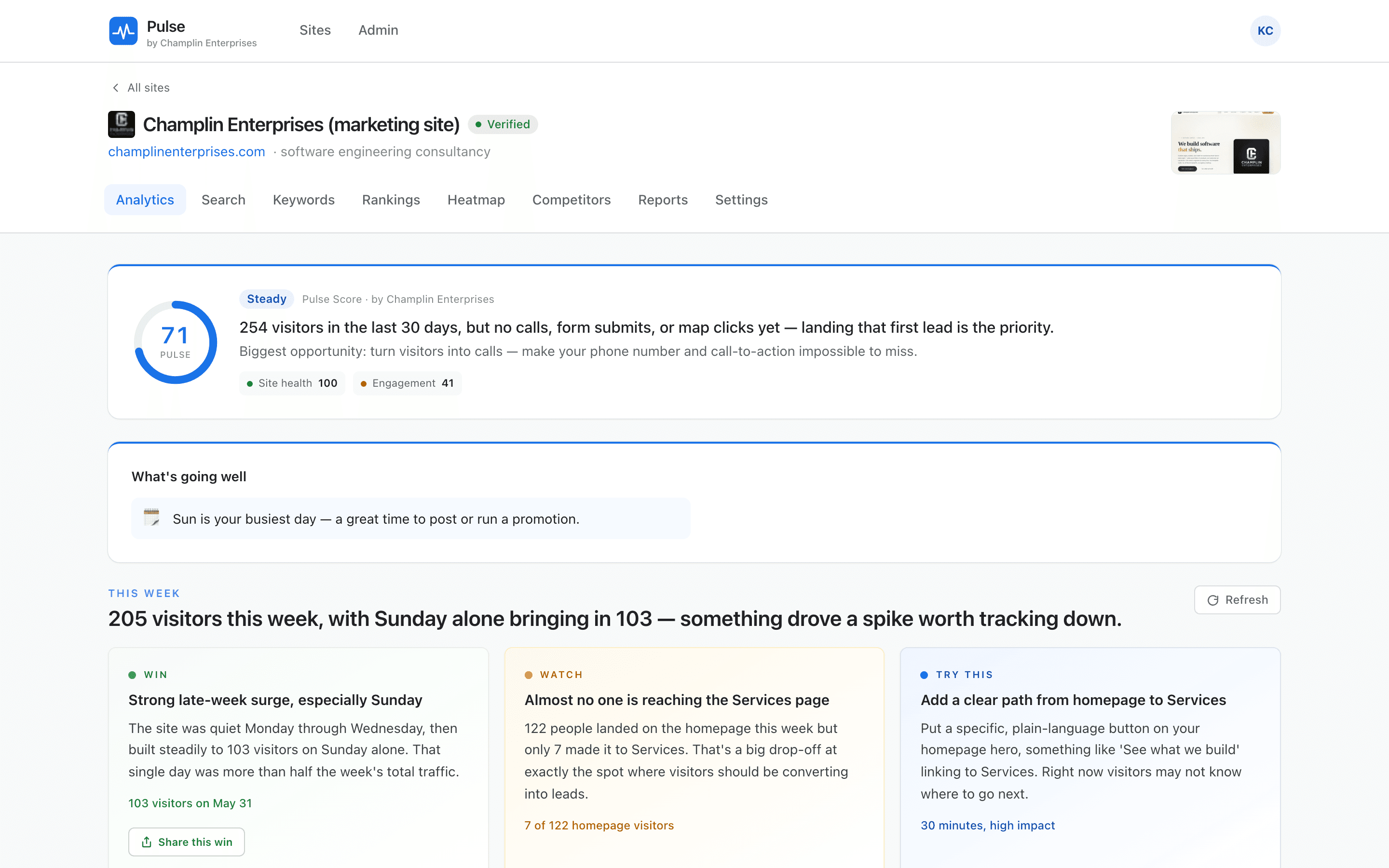
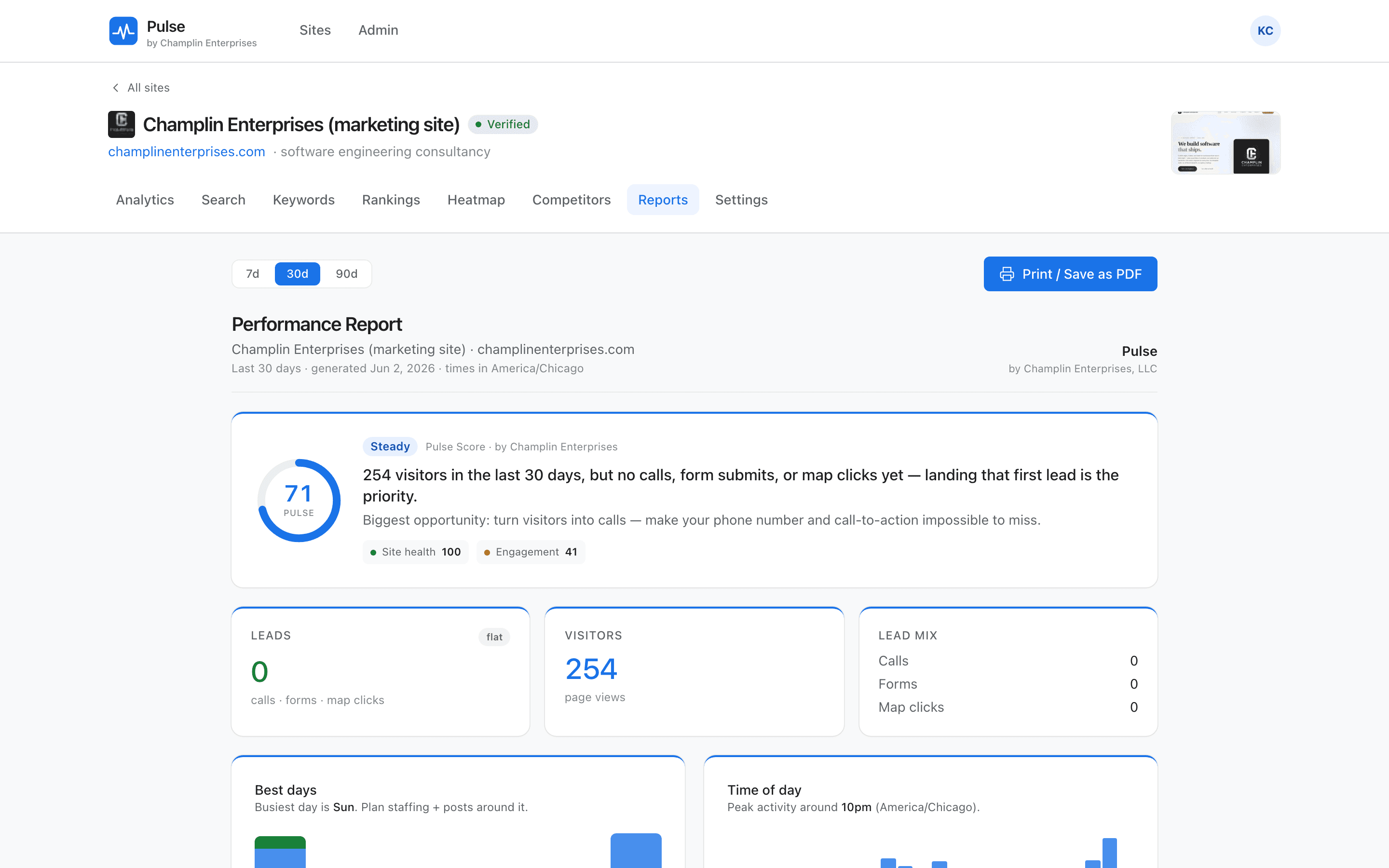
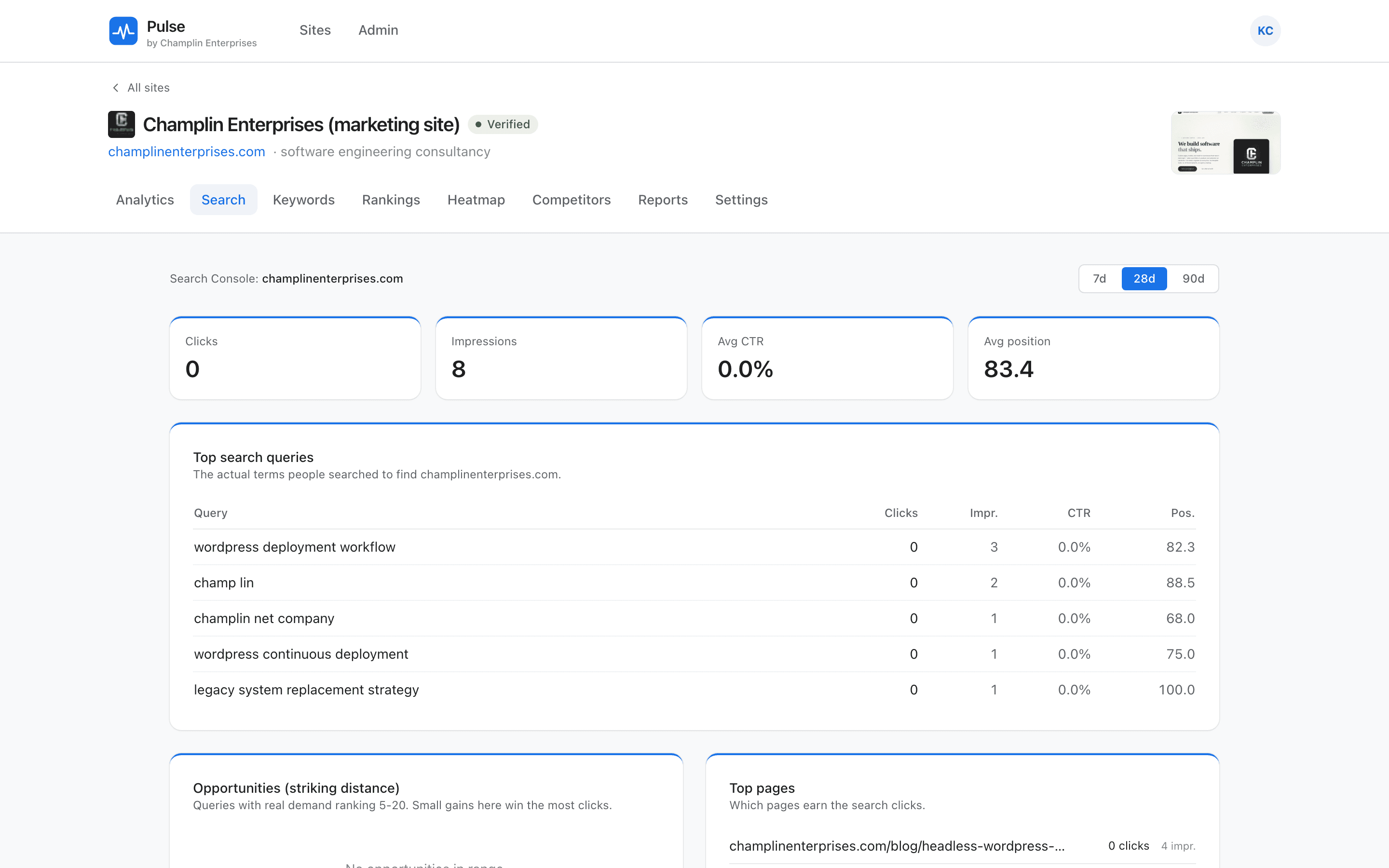
Pulse is one of ours — a live SaaS that watches a business's local SEO and writes the week up in plain English, with Claude doing the writing. Everything below is the running product monitoring this very site. The same principal engineering goes into your build.
How it was built
Blank repo to production in weeks.
Pulse went from nothing to a live product in weeks — Laravel and ClickHouse under the hood, Claude generating the weekly read. That's how we build: principal engineering, AI used as leverage, something real in front of users fast. The screens above aren't a mockup — that's the live app, reading this site.
And Pulse is just one piece. Every engagement comes with the whole platform — portal, support, e-sign, and monitoring — all built and run by one company, not rented from five.
Live
In production, not a prototype
Weekly
Plain-English read, written by Claude
0–100
One score the owner actually gets
Weeks
Idea to launched, not quarters
05
Headless WordPress, by design
Headless WordPress
Most agencies install a $50 theme and call it a website. We engineer something different: a custom-designed frontend running on top of WordPress, decoupled. Your team keeps the editing experience they already know. Your visitors get a site built like enterprise software — sub-second loads, real security, no plugin bloat, no rebuild every two years. This very site is built that way. By design.
What this looks like in practice
- A custom-designed frontend — your brand, not a WordPress theme
- Headless architecture — WordPress for your editors, Next.js for your visitors
- Sub-second loads on the slowest connection your buyer actually uses
- Real security — the WP admin never lives where attackers look
- No plugin tax, no theme dependency, no rebuild every two years
- Same stack we use for Fortune 500 apps
Why headless
Yes, we build websites. We build only one kind.
Most businesses don't lose customers because their site looks dated. They lose them because it loads slowly on a phone, breaks twice a year when a plugin updates, or gets hit by whatever WordPress exploit is making the rounds. A headless build solves all three — at the architecture level, not as patches.
The editor side stays familiar. Your team logs into WordPress the way they always have. The visitor side is something completely different — a custom-engineered frontend running on the same infrastructure that powers Fortune 500 applications. Sub-second loads. Real security. A design ceiling wherever you want it.
And because we hand over the codebase, you own it. No agency retainer to keep the lights on. No vendor lock-in. No rebuild every two years when the theme stops being maintained. The frontend evolves with your business. The content stays editable by your team.
How they compare
Same WordPress editor for your team.
A completely different site for your visitors.
Managed services
Launching is half the job.
We run the other half.
Most agencies hand you a codebase and a stack of third-party subscriptions to babysit — one tool for errors, another for support, a third for uptime. We engineered our own. Every site we run is monitored, supported, and backed by software we built and host ourselves: one team, one bill, and a Care Plan that proves its work every month. If you want the website layer, start with our web design and development page; if you need the operations layer, see our managed hosting and support platform.
Visibility
Pulse
Tracks how you surface in local search and what visitors actually do once they land — so “are we being found?” has a number, not a shrug.
Reliability
BugHive
Watches every page for errors and downtime and flags them to us before your customers ever feel them — the early-warning system most sites simply don't have.
Support
Support Desk
A real, branded support desk. When something needs a human, your team reaches ours — logged, answered, and resolved, never lost in an inbox.
Proof
Client Portal
One login to see exactly what we did this month — backups, security patches, updates, SEO. The retainer stays visible, never a black box.
And when the work calls for it: your own document signing, self-destructing secret sharing, and an SSO’d AI assistant trained on your account — all engineered in-house, all under one roof.
How engagements work
Sprint. Build. Fractional.
Three pricing models, matched to the shape of the problem. If you need a fast outcome, start with our Sprint. If the work is broader or needs an operating layer after launch, see the platform. And if you're comparing the bigger picture, browse our products or read the Inner Circle roadmap. All three are principal-led, fixed-scope or scoped-monthly, and start with a free 30-minute audit.
01
Sprint
2–4 weeks · one focused outcome. A working prototype, a migration unblock, a technical audit with an action plan you can execute. Fixed price, fixed timeline, no scope creep.
02
Build
6–16 weeks · a launched product. Custom software, a SaaS MVP, an AI integration that lives in production. Architecture, engineering, deployment, all by the engineer writing the code.
03
Fractional
Monthly retainer · embedded principal capacity. For businesses who need a CTO's judgment without hiring one. Direct access, no layers, no project managers in the middle.
Process
How We Work
Step 01
Conversation
We talk. You tell us what you need, we tell you what's possible. If we're a fit, we'll know quickly.
Step 02
Architecture
We plan the right solution before writing a single line of code. No surprises, no scope creep.
Step 03
Engineering
We build, test, and deliver. Direct communication throughout — you always know where things stand.
Every change goes through eight stages, from concept to production, with guardrails enforced in code. See the full lifecycle.
Your client portal
One secure door to everything we build you.
Every client gets a private Champlin Enterprises portal — your analytics, support, documents, and every tool we build, in one place. Sign in with a secure link we email you: no password to remember, none to get stolen, one click into each tool.
FAQ
Common questions
Who does Champlin Enterprises work with?
Clients of every size, from product users and managed-hosting customers to teams hiring us for custom builds, AI work, and principal engineering. Whatever the engagement, you get principal-led work: 28 years of experience leading the team, no offshore handoffs, no outsourcing.
What is the minimum engagement size?
The productized Sprint is a flat $25,000. Build and Fractional engagements scale with the problem, and our products and hosting plans carry their own public pricing. Start with a free 30-minute AI Opportunity Audit — a one-page plan, no commitment.
Do you outsource or subcontract any work?
No. Every engagement is led by Kevin Champlin, with our AI engineering team doing the build and every change reviewed before it goes live. No offshore teams, no account managers layered between you and the people building it. This is the product.
Can Champlin Enterprises handle AI integrations in production?
Yes. AI-first applications are the primary focus. Work spans Claude (Anthropic), GPT (OpenAI), and open-weight models (Llama, Qwen, DeepSeek), with end-to-end delivery of retrieval, fine-tuning, evaluation harnesses, and production deployment.
Does Champlin Enterprises work with startups or only Fortune 500?
Both. The common thread is that clients understand what principal-level engineering is worth. Typical startup engagements are Series A or later, or well-funded seed teams with a clear product thesis. Fortune 500 engagements are usually AI pilots or code audits.
What does the engagement process look like?
Four steps: (1) 30-minute discovery call to determine fit. (2) Written technical plan and proposal before any code is written. (3) Build, test, and deliver with weekly demos and direct async communication. (4) Complete ownership handoff — no vendor lock-in, no proprietary frameworks.
Is Champlin Enterprises available for technical due diligence or code audits?
Yes. Common engagement patterns include acquisition diligence, investor-mandated reviews, and pre-platform-rebuild audits. Typical scope is one to three weeks.
Where is Champlin Enterprises located?
Remote-first, based in northern Illinois. The day-to-day runs over Zoom and shared workspaces — the way modern software actually gets built — so location is rarely a constraint. Kevin has deep roots in the Illinois Valley and works with clients across Chicagoland, and travels for in-person kickoffs, working sessions, and reviews whenever an engagement calls for it.
A softer step
Not sure which engagement fits?
Most businesses don't know whether they need a Sprint, a Build, or a Fractional engagement until they've had thirty minutes of real conversation about the work. That's what the Free AI Opportunity Audit is for: thirty minutes on Zoom, three concrete places AI quietly pays for itself in your business, a one-page plan emailed within 48 hours. No pitch. No follow-up sales sequence.
Let's build something.
A real problem. A real budget. A bias toward getting it live. Start with a 30-minute audit, no pitch, no follow-up sequence.
30-minute call. One-page plan emailed within 48 hours. No pitch deck.